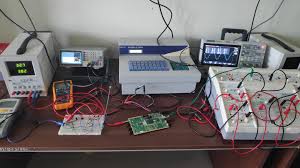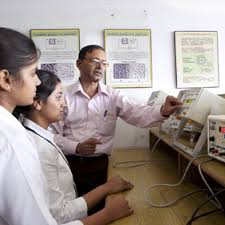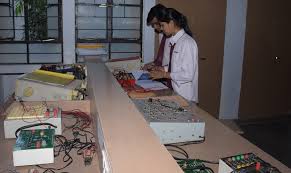

R. P. Indraprastha Institute of Technology offers a dynamic B.Tech programme in Electronics & Communication Engineering that bridges theoretical foundations with real-world applications. Students gain expertise in Wireless Communication, Microwave Engineering, Digital Signal Processing, Embedded Systems, Optical Fibre Communication, Computer Networking, Information Security, Robotics, and Instrumentation. The curriculum is continuously updated to reflect evolving industry trends and technological advancements, with strong emphasis on hands-on training, innovative learning practices, and the development of versatile engineering professionals.

It gives me great pleasure to welcome you to the Department of Electronics and Communication Engineering. The discipline of Electronics and Communication Engineering plays a vital role in shaping modern technology, with applications spanning communication systems, embedded systems, signal processing, VLSI , robotics, artificial intelligence, and the Internet of Things.
Our department is committed to delivering a strong academic foundation complemented by hands-on learning, research exposure, and industry-oriented training. We aim to nurture innovative, skilled, and ethically responsible engineers capable of addressing real-world challenges in a rapidly evolving technological landscape.
Supported by a team of highly qualified faculty members, state-of-the-art laboratories, and a collaborative learning environment, the department encourages students to explore emerging domains such as robotics and automation, interdisciplinary projects, and cutting-edge research. Strong emphasis is placed on practical applications, industry interaction, internships, and innovation-driven activities.
I encourage our students to make full use of the opportunities provided, cultivate curiosity, and actively engage in academic, co-curricular, and extracurricular pursuits. Together, we strive for academic excellence, technological innovation, and the holistic development of our students.
I extend my best wishes to all students and faculty members for a successful and fulfilling academic journey.
With Best Wishes,
Dr. Vijayluxmi Meena
Head – Department of ECE,
RPIIT, Karnal
E-Mail: dr.vijayluxmi@rpiit.com
Vision:
To develop competent technocrats who continuously pursue professional excellence in the field of electronics and communication engineering.
2. To serve as a center of excellence that fosters disruptive research in fields like 6G, Iot and AI-integrated hardware.
Mission:
To provide students with a high-quality education in Electronics and Communication Engineering and to promote professional ethics that meet international standards through creative teaching and learning techniques that place a strong emphasis on application.
2.our department now prioritize VLSI fabrication and TinyML using industry-standard tools like Cadence and TensorFlow Lite to bridge the gap between silicon design and artificial intelligence.
Program and Eligibility
Bachelor of Technology in Electronics & Communication Engineering
The department offers Bachelor of Technology in Electronics & Communication Engineering, affiliated from Kurukshetra University, Kurukshetra.
Eligibility: After 12th with PCM (4 year) students can take admission in first year.
After Diploma (3 year) students can take admission in 2nd year through LEET.
RESEARCH PUBLICATIONS
DR. Vijayluxmi Meena , HOD
Patent Publication:
Publications
WORKSHOP AND FDP:
6. Participated in one week international Faculty Development Program on
“Computational Techniques for Electromagnetic” organized by the Delhi
Technological University (DTU) from 27-12-21 to 31-12-21.
7. Participated in IP Awareness /Training program under National Intellectual
Property Awareness Mission Organized by Intellectual Property Office, India on
15 May, 2025
8. Attended webinar on “Recent Advancement in Metamaterial Microwave Absorbing
Structure and Techniques” organized by IEEE Delhi APS Chapter-Jaipur on
October 9,2021.
9. Attended webinar on “Antenna for 5G” organized by IEEE Delhi APS Chapter-
Jaipur on October 8, 2021.
10. Completed twelve week (Jul-oct 2022) Faculty Development Program on
“Priciples of Signal Estimation for MIMO/OFDM Wireless Communication”
organized by NPTEL with scoring 85%.
Er. Ritu Sharma, Assistant Professor
This lab explores the foundations of digital logic design, teaching students how to build the core components of modern computing systems. Through practical sessions, learners verify logic gates and implement combinational circuits such as adders, multiplexers, and decoders. The curriculum extends to sequential logic, providing hands-on experience with flip-flops, counters, and shift registers. Students gain technical proficiency by working directly with 74xx series ICs and digital trainer kits to bridge theoretical binary concepts with physical hardware.
The Signals and Systems Lab bridges the gap between complex mathematical theory and practical engineering by using simulation tools to analyze and manipulate data. Students learn to synthesize both continuous and discrete-time signals, forming the basis for modern communication and signal processing. By exploring LTI systems through convolution and performing frequency analysis via Fourier, Laplace, and Z-Transforms, learners uncover how signals behave across different domains.
Practical proficiency is gained using industry-standard software like MATLAB, Octave, or Python, enabling students to visualize abstract concepts like system stability and sampling. Ultimately, this lab provides the analytical framework necessary for designing advanced technologies in control systems and digital signal processing.
This laboratory provides hands-on experience in designing and testing electronic communication systems across wired, wireless, and fiber optic media. Students master Analog (AM, FM, PM) and Digital (ASK, FSK, PSK, QAM) modulation techniques to understand how information is efficiently encoded and transmitted.
By using Spectrum Analyzers and Communication Trainer Kits, learners analyze the critical impact of noise, multiplexing, and demodulation on signal integrity.
This practical training builds the essential technical foundation required for careers in telecommunications, satellite networking, and high-speed data transfer.
The Analog Circuit Laboratory provides a hands-on environment for mastering the practical application of transistors and operational amplifiers in sophisticated signal-processing systems. Students design and evaluate multi-stage and feedback amplifiers to understand high-gain signal stability and performance.
The curriculum focuses on implementing linear and non-linear Op-Amp circuits, enabling students to perform mathematical operations and precise signal filtering.
Participants also construct oscillators and multivibrators for specialized waveform generation, alongside studying high-efficiency power amplifiers and voltage regulators.
By bridging the gap between theoretical physics and hardware design, this lab prepares students to develop the critical interfaces required for modern electronic devices.
Practical training involves interfacing controllers with peripherals such as LCDs, Stepper Motors, and ADCs to bridge the gap between code and physical motion.
By utilizing simulation IDEs like Keil and Proteus, learners develop essential debugging skills required for designing advanced embedded systems and IoT applications.
The Antenna & Wave Propagation Lab provides a practical deep-dive into the behavior of electromagnetic waves and the structural design of antennas. Students analyze the radiation patterns of diverse types, including Dipole, Yagi-Uda, and Horn antennas, to understand how energy is distributed in space.
Through hands-on measurement, learners determine critical parameters such as Gain, Directivity, and Beamwidth, which are essential for optimizing long-range wireless links.
The curriculum also investigates the impact of polarization and impedance matching on signal integrity to ensure maximum power transfer.
By exploring propagation phenomena like reflection and diffraction, students gain the expertise needed to design robust infrastructure for satellite, mobile, and radar networks.
This laboratory explores the high-speed, noise-resistant digital techniques that form the backbone of modern internet and cellular networks. Students master Baseband and Passband modulation, including PCM, QPSK, and QAM, to understand how binary data is efficiently packaged for transmission.
By implementing Error Control Coding and Spread Spectrum techniques, learners analyze methods for maintaining data integrity and security across noisy channels.
Through hardware kits and simulations, the lab provides the essential technical foundation for developing advanced 5G, Wi-Fi, and satellite communication systems.
Modernizing the Digital Image Processing Laboratory for a college involves transitioning from a static repository to an interactive, cloud-integrated ecosystem. Digital image processing features real-time demonstrations using OpenCV.js, allowing students to manipulate algorithm parameters like thresholding and Gaussian blur directly in the browser via intuitive UI sliders. By embedding Google Colab notebooks and Markdown-based manuals, the lab provides a seamless, zero-install environment for experimenting with advanced topics like Deep Learning, Medical Imaging (DICOM), and Satellite Remote Sensing. This digital transformation is anchored by a high-impact project showcase and an industry-aligned software stack, effectively bridging the gap between academic theory and the professional standards of 2026.
In this lab students use their basic knowledge to design a small circuit having real time utility.
Our Advanced Laboratory now features 3D printing technology to empower students with rapid prototyping and precision engineering capabilities for complex research. This facility enables the seamless transition from CAD designs to functional physical components, optimizing the development cycle for senior projects. Students can produce custom enclosures and mechanical rigs, ensuring a high level of professional execution in their experimental setups.
The newly upgraded Microwave Engineering Laboratory marks a significant leap in our college’s research infrastructure, blending traditional high-frequency theory with modern additive manufacturing. The facility is now equipped with high-precision Vector Network Analyzers (VNAs) and spectrum analyzers, allowing students to conduct sophisticated S-parameter analysis and impedance matching with industry-standard accuracy. A standout feature of this update is the integration of 3D printing technology, which enables the rapid fabrication of custom horn antennas, waveguides, and complex dielectric structures that were previously difficult to source.
By utilizing advanced electromagnetic simulation software alongside these hardware upgrades, students can now design, simulate, and physically test microstrip circuits and RF components within a single development cycle. This hands-on environment is specifically designed to support senior design projects and advanced research in 5G/6G communications, satellite systems, and radar technology. This enhancement ensures our graduates are proficient in the tools and methodologies currently driving the global telecommunications and aerospace industries.
No details found!!
No details found!!
No details found!!